
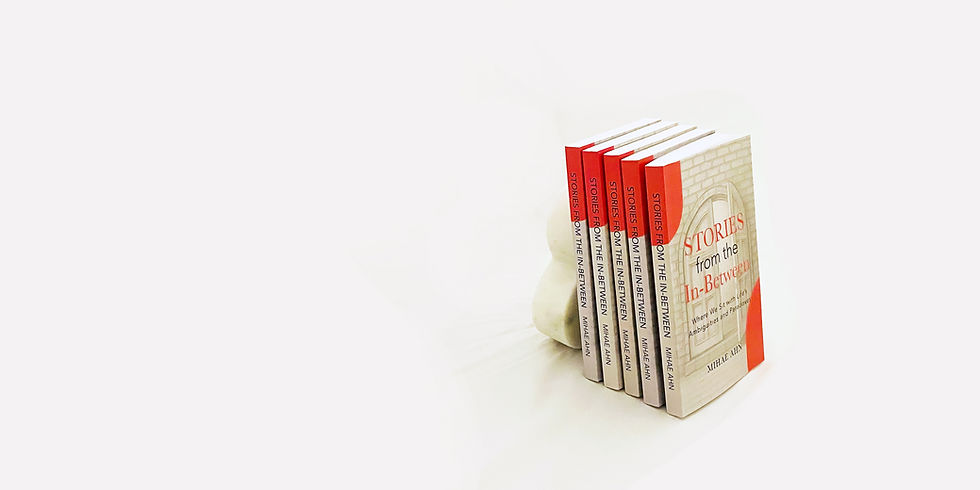
Read an Excerpt
Introduction
“So… what the heck should I do?”
This question follows me everywhere these days. Working in the technology sector at a time when the world is enthralled, overwhelmed, energized, terrified, and confused by AI, I hear it constantly from CEOs and executives trying to keep up with the speed of change. We talk about opportunities and risks. We talk about return on investment. We talk about the unprecedented pace of technological evolution. We break things down, weigh options, analyze scenarios, and try to eventually make decisions. There are countless ways to approach this ever-shifting world of AI.
Underneath all of it, though, is that all of us are navigating uncertainty.
When we think about it, uncertainty is not unique to AI. Far from it. Our lives are full of uncertainties. There rarely has been a clear, single answer to that question above. Not with technology. Not with careers. Not with relationships. Not with any part of being human.
Life is ruthlessly unscripted. Nothing about the future in front of us is certain. We can plan all we want, but one moment, one unexpected thing happens, and all the glamorous planning we have done goes out the window.
Life is also extremely complicated. We are social beings who live in community. The “community” we are part of now is much, much bigger than the one just a few decades ago. We have an impact on one another. Intentionally and unintentionally, we affect each other in both good ways and not-so-good ways each day, each moment. Given how connected we are, the reach of our impact and the impact others have on us are broader.
So we face decisions. Thousands of decisions over the course of our waking hours. They stare at us whether we want them or not. Some are big and life-shaping. Some are small and mundane. None arrive in tidy packaging. Based on a dizzying mix of variables we consciously and unconsciously evaluate, we choose. From what to eat for breakfast to whether to speak up in a tense meeting to whether to build a life in a foreign country or return home. (I shared my struggles with this decision, which was to have an oversized impact on the rest of my life, and how I arrived at the decision to live an immigrant life in my first book, "Perfectly Incomplete".)
The thing is, there rarely is one obvious answer. More often than not, several options could work. And each option carries its own mix of upsides and downsides that we cannot possibly predict in the moment.
One example has been especially present for me in the last few years. I write during the in-between times. I’m a part-time writer with a full-time job and a young family, which means dedicated writing time is rare. Most of my writing happens between activities, between responsibilities, between tasks. This is how my first two books came to life, and this third one is not any different.
For example, I write between a pick-up and drop-off. After dropping off our 7-year-old at dance school, I write in my car for the fifty minutes she’s inside. I also write early in the morning and late at night. After the evening routine is completed and everyone is in bed, I write for however long I can before I absolutely have to sleep. Also, before the morning routine starts, I wake up early and write until the family’s morning routine starts. I make decisions on a daily basis about how much time I allocate to writing and how much to other priorities. I have a demanding full-time career, and the time for it is always protected from my part-time endeavours. Work hours are for my full-time career. That boundary has been clear and easy to respect for various reasons.
Weekends are trickier. I wake up early and write before the family wakes. Sometimes my creativity feels sluggish, but other times the tap is wide open. I get so deep into my writing that it feels like I could write the entire book in one day. Those moments are intoxicating. The fire ignites and burns hot. When I’m in that zone, it takes an enormous amount of willpower to stop. Every cell in my body resists stepping away.
And then my daughter wakes up. She finds me in my office and gives me a big hug, ready to start her day filled with whatever she wants to do with me. Her days rarely begin or end without me. That precious little face pulls me instantly into my “mother” identity, even when my “writer” identity is burning bright. When her readiness to start the day collides with the height of my creative flow, the collision inside me is real. The mother and the writer crash. Hard.
It is always challenging to juggle the various priorities we have and the roles we play, isn't it? For me, this struggle has amplified big time ever since I started my journey as a part-time writer a few years ago. I have been facing this dilemma on a daily basis ever since. I make a different decision each day, consciously and unconsciously, by evaluating a whole bunch of variables. It rarely comes easy. What’s more, it rarely feels “right” when I make a decision. Because there isn’t the “right” decision. There isn’t a clean formula that I can follow to come up with the exact number of hours, minutes, and seconds to spend on each of the roles I play each and every day. There isn’t a manual that tells me step-by-step instructions I can follow to the tee to make sure the life I’m building turns out to be solid.
Most of the time, more than one option can work. Most of the time, all of them can work. Each one comes with a mix of trade-offs. Some days I bounce between options like a ping-pong ball. Other days, I freeze under analysis paralysis.
Uncertainty rattles me. Clarity feels safe. Uncertainty activates the emotions I’d rather avoid: fear, insecurity, frustration, discomfort, anxiety. Our ancestors survived by quickly separating danger from safety. That wiring did not disappear. It is still with us.
For a long time, I wanted life divided into simple categories. Good or bad. Right or wrong. Perfect or flawed. Friend or enemy. I was convinced life should fit cleanly into one or the other. It took me a long time to recognize this, and even longer to realize that this mindset is something I can evolve from. It doesn’t have to define me.
Division and binary categorization are easy to spot. We see them in headlines, in workplaces, in dinner table conversations. Part of it comes from our biological wiring. But there’s more. There’s the overwhelming volume of information we consume daily. We are exposed to more information in a single day than our ancestors encountered in an entire lifetime. Imagine being transported five thousand years back, when knowledge moved slowly through stories, memory, and a few written records. Compare that to 2025, with smartphones filled with multiple AI tools and apps, buzzing in our hands all day. The shift from scarcity to overwhelming abundance is staggering. The brain copes by simplifying. Nuance takes effort. Binary thinking is quick. When life moves fast and feels overwhelming, our mind reaches for clarity, for categories, for lines.
Rapid technological change, economic instability, shifting social norms, and political volatility create a collective sense of threat. When humans feel threatened, we cling to what’s familiar. It is a protection mechanism.
And then there is identity. Identity today is both celebrated and weaponized. Anchoring ourselves in groups has become louder, sharper, more public. Once identity becomes moral or existential, disagreement can feel like an attack on the self. That fuels the us-versus-them mindset even further.
Reflection tells me I slip into binary thinking most often when I’m overwhelmed. When the grey feels too heavy to hold, the mind reaches for the relief of categorizing. Standing in the grey feels lonely. Standing on a defined side feels safe.
There is more: Belonging. There is always something comforting about belonging. Claiming a side gives us a sense of group, direction, narrative. The alternative is floating in the in-between, a lonelier space, though often a truer one.
There was a period when I often ended my day in bed crying. Because I felt so lonely. Because I believed I didn’t belong anywhere. I didn’t feel like I belonged in the community and culture I came from. And at the same time, I didn’t feel like I belonged here, building a home as an immigrant. That loneliness was bone-deep, bone-chilling. One of the drivers of that pain was the binary thinking I subscribed to. Based on that thinking, I belonged nowhere.
Looking back, it makes sense that I didn’t feel at home anywhere. I was creating my own home, my own footing. Of course I didn’t feel rooted yet. It was part of the process. It didn’t feel that way at the time though. It felt like personal failure.
When I couldn’t find a clear answer to that opening question, I often went straight to self-blame. I told myself uncertainty was evidence of my lack. Lack of experience, lack of knowledge, lack of decisiveness, lack of information, lack of courage, lack of wisdom. I believed my inability to find certainty meant there was something missing in me.
In this obsession and insecurity, what I didn’t give myself was space. Space to sit with paradox. Sit with ambiguity. Sit with uncertainty.
There is an evening I remember vividly. Early days as a new immigrant, trying to find my footing in a world that felt too foreign, too indifferent, too cold. I stood in front of a mirror after another long day of job searching. The woman staring back looked exhausted. Insecure. Sad. Trying to hide all of it behind makeup and a bright outfit that did not match her inner world.
“Do I really have to go?” I asked the reflection. “I cannot possibly bring myself to attend another networking event. I’ve embarrassed myself enough.”
The other voice snapped back. “Do you want a job or not? Everyone says networking is the key. Go.”
That advice was everywhere. Professors. Career centers. Immigrant support groups. Articles. Blogs. Network is currency. Put yourself out there. Build your network.
What I was feeling that evening wasn’t simple resistance. It was something deeper. A quiet voice wondering, “There must be more than one way to do this. This can’t be the only path. It’s either this or I’m a lost cause.” But I followed the rulebook anyway. I shut myself up. I went.
Did it bring the outcome I hoped for? Not even close. Every event left me more defeated. I walked in bruised by rejection and left with even more of it. It felt like pouring alcohol on an open wound. Painful but supposedly productive.
Was the advice good in general? Yes. My network today is one of my greatest assets. But was it right for me at that time? Not at all. I was lost. Sad. Wanting to disappear into the safety of my tiny apartment. And paradoxically, longing to be understood. To be seen. To have someone recognize what I was carrying. I wanted to hide and be found at the same time.
That contradiction has followed me through many seasons of life. The desire to be understood and the fear of being seen. The longing for connection and the instinct to retreat. The hunger for certainty and the truth that life refuses to give it.
This book lives in that space. The space between clarity and confusion, connection and withdrawal, strength and fragility, ambition and exhaustion. The shades between black and white. The unnamed colors between our binaries. The numerous contradictions we carry but rarely name.
There are no solutions to these paradoxes. No way to erase them. Much of my agony came from trying to force certainty where life only offered complexity. What reflection, writing, and painful self-doubt have taught me is this: the work is not conquering the paradoxes. The work is learning to sit with them.
In this effort, what helps me is space. Space where ambiguity and unclarity can exist without judgment. Where I can slow down enough to notice what is happening inside me. A space where curiosity can replace urgency. A space in-between.
That space is what I attempt to create in this book. As you read, I hope you find that space for yourself. I hope this book becomes that space. A space where the paradoxes we carry can be explored without pressure, without guilt, without rush.
If there is comfort to be found, it is in knowing that all of us navigate these greys of life. It is universal. It is shared. We are all trying. We are all shaping a future one imperfect step at a time.
We live here. In the in-between. In the spectrum. In the unlabelled.
The stories in this book are from that space. I share my stories from the in-between to create a warm, gentle space for us to sit with uncertainties. To ponder, to wonder, to reflect, and to feel seen and heard.
So, welcome. Let’s begin.